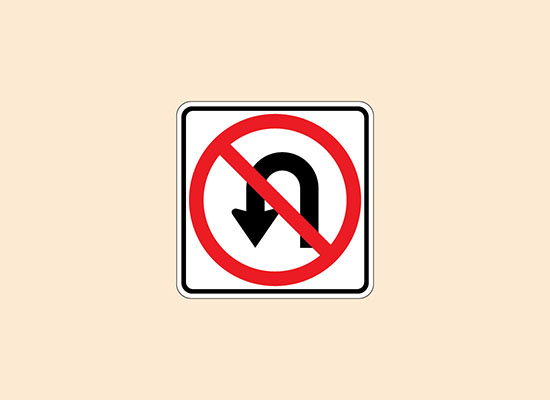
To ensure the lane next to you is clear when you want to change lanes:
- 1.Look into the rearview mirror only
- 2.Turn your head and look in the lane you are going to enter
- 3.Turn your head and look over the right shoulder
Which of the following is true about double parking?
- 1.It is illegal unless you wait in the vehicle
- 2.It is allowed if you are making a delivery
- 3.It is illegal under any circumstances
When you want to pass a large truck in the center of three lanes, it's best to pass:
- 1.Very quickly on the right and move ahead of it
- 2.Very slowly on the left and move ahead of it
- 3.Quickly on the left and move ahead of it
If you have a green light and want to turn left, but oncoming traffic is heavy, you should:
- 1.Wait at the crosswalk for traffic to clear
- 2.First wait in the center of the intersection for traffic to clear
- 3.Take the right-of-way since you have the light
- 4.Use the next intersection
If your brake pedal suddenly sinks to the floor, you should first:
- 1.Try to raise it by hooking your toe under it
- 2.Shift into neutral and shut the engine off
- 3.Try to pump it to build up the pressure
- 4.Apply the parking brake hard to stop the car
When looking ahead of your vehicle while driving, you should:
- 1.Look only at the car ahead of you
- 2.Look straight ahead at all times
- 3.Scan your surroundings
Which of these statements is true about keeping children safe in vehicles?
- 1.Children under one year and over 20 lbs. should ride buckled up in the front seat
- 2.The back seat is generally not the safest place in the car for all children 12 years and younger
- 3.Infants should not ride in the front seat of vehicles
U-turns in residential districts are legal:
- 1.Across two sets of solid double yellow lines
- 2.When there are no vehicles approaching nearby
- 3.On a one-way street at a green arrow
Why should drivers and passengers adjust seat headrests in motor vehicles?
- 1.It helps people relax, relieving the stress of driving
- 2.It lets people maintain their hair styles
- 3.Tired people can prop up their heads, helping them stay alert
- 4.It helps people avoid and reduce the severity of neck injuries
When you want to overtake and pass another vehicle you should:
- 1.Wait for a signal from the other driver
- 2.Stay close behind so you need less time to pass
- 3.Change lanes quickly so the other driver will see you
- 4.Signal and pass when safe to do so
A "no standing " sign means:
- 1.You may stop to load or unload merchandise
- 2.You may stop temporarily to pick up or discharge passengers
- 3.You may never stop your vehicle
- 4.You may park if the driver remains in the vehicle
If you exit a freeway with a ramp that curves downhill, you should:
- 1.Start braking when you enter the curve
- 2.Slow to the posted speed limit for the freeway
- 3.Slow to a safe speed before the curve
If you want to turn right at the next intersection, begin your turn signal:
- 1.When you reach the intersection
- 2.At least 100 feet before the turn
- 3.As soon as you see cars behind you
- 4.At least 50 feet before the turn
If a tire blows out, you should:
- 1.Apply the brakes, then shift into neutral
- 2.Speed up to gain traction and then pull to the right
- 3.Hold the steering wheel firmly, and ease up on the gas
- 4.Shift into neutral, then apply the brakes
What should you do if you are approaching an intersection with a flashing yellow signal light?
- 1.Stop before crossing the intersection
- 2.Maintain your speed but watch for other vehicles
- 3.Slow down and cross carefully
When a red light flashes at a railroad crossing, you must:
- 1.Stop 10 ft behind the signal
- 2.Stop only if you see a train coming
- 3.Slow down before crossing
- 4.Stop and then proceed when safe
- 1.No U-turn
- 2.U-turn area ahead
- 3.No passing
When a yellow arrow appears as you wait in a dedicated right turn lane, you should:
- 1.Stop and do not make the turn under any circumstances
- 2.Be prepared to obey the next signal that appears
- 3.Check for pedestrians and then turn with caution
Blood alcohol content (bac) depends on each of the following except:
- 1.How physically fit you are
- 2.How much time passes between drinks
- 3.Your body weight
- 4.How much you drink
Driving under the influence of a drug that makes your driving unsafe is permitted:
- 1.Under no circumstances
- 2.If it is a prescription drug
- 3.If it is not an illegal drug