Before getting out of your parked car on the traffic side of the street, you should:
- 1.Check traffic coming from behind before opening your door
- 2.Open your door so the other vehicles will stop and let you out
- 3.Give a hand and arm signal for a left turn
When you approach a sharp curve in the road, you should:
- 1.Start braking before you enter the curve
- 2.Start braking as soon as you enter the curve
- 3.Accelerate into the curve and brake out of it
When you are in a dedicated turn lane controlled by a green arrow, which of the following is true?
- 1.All oncoming traffic is stopped by red lights
- 2.You may turn in the arrow's direction without checking traffic
- 3.All vehicles or pedestrians in the intersection must yield to you
What helps ensure safe driving if you drink alcohol socially?
- 1.Stop drinking one-half hour before driving
- 2.Drink coffee before driving
- 3.Ride home with a friend who has not been drinking
- 4.Take a cold shower before driving
Blocking an intersection during "rush hour " traffic is:
- 1.Not permitted under any circumstances
- 2.Not permitted unless you have the right-of-way
- 3.Not permitted unless some of the cross traffic can get around you
A red arrow pointing to the right on a traffic light means you may:
- 1.Turn right after you have come to a complete stop
- 2.Not turn right until the light turns green
- 3.Turn right after slowing and checking traffic
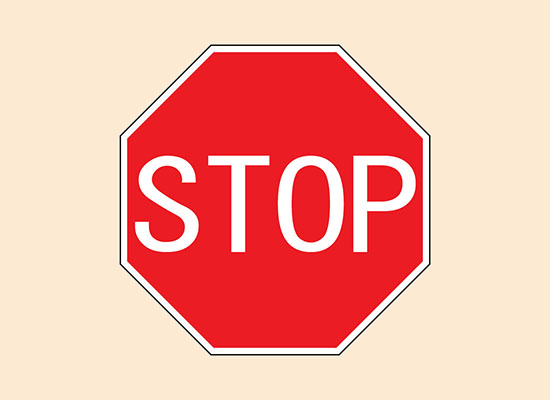
- 1.Stop only if other vehicles are present
- 2.Stop ten feet before the intersection
- 3.Stop every time
Pedestrians using guide dogs or white canes must:
- 1.Cross at intersections with traffic controls only
- 2.Be given the right-of-way at corners only
- 3.Be given the right-of-way at all times
If you rear-ended a car, you were probably:
- 1.Looking in your rearview mirror too often
- 2.Following too closely
- 3.Weaving in and out of traffic
If you become angry or upset, you should:
- 1.Park the car and "cool down " before driving on
- 2.Speed up so you can reach your final destination faster
- 3.Control your emotions while driving
A good safety rule, when you are sure you have a legal right-of-way, is:
- 1.Always take it
- 2.Always let the other driver have it
- 3.Never insist on it
In new york state, what bac is evidence of intoxication?
- 1.0.03%
- 2.0.05%
- 3.0.08%
- 4.0.10%
You must not cross a double line to pass another vehicle if the line on your side:
- 1.Is a broken yellow one
- 2.Is a solid or double solid yellow one
- 3.Has double raised yellow dots
- 4.Is none of the above
You should not enter an intersection with limited space, knowing you will block the intersection:
- 1.Unless some of the cross traffic can get around you
- 2.Unless you have the right-of-way
- 3.Under any circumstances
Driving under the influence of a drug that makes your driving unsafe is permitted:
- 1.If it is not an illegal drug
- 2.If it is a prescription drug
- 3.Under no circumstances
Improperly inflated tires can result in:
- 1.Inefficient gas mileage
- 2.Blown out tires and shaking in the steering wheel
- 3.All choices are correct
- 4.Uneven wear and additional avoidable replacement of tires
What should you do when approaching a railroad crossing with no signals (such as lights or crossing gates)?
- 1.Do nothing; all railroad crossings have signals
- 2.Increase speed to get across the tracks quickly
- 3.Slow down and be prepared to stop
- 4.Always bring the car to a complete stop
Which of the following statements applies to all driving emergency situations?
- 1.Think before you act
- 2.Apply your brakes immediately
- 3.Always slow down gradually
- 4.Your first reaction is the best reaction
Use your high-beam headlights at night:
- 1.Only on dark streets
- 2.As little as possible
- 3.Whenever it is legal and safe
Which of the following influences the effects of alcohol?
- 1.The amount of food in the stomach
- 2.All three choices
- 3.How much time passes between drinks
- 4.The body weight of an individual