If you see children playing nearby, before backing out of your driveway, you should:
- 1.Walk to the back of the car to be sure the way is clear
- 2.Tell the children to stay away from the driveway
- 3.Race your motor to warn the children that you are moving
- 4.Sound your horn so the children will hear you
If the driver's left hand and arm are extended upward, it means she will:
- 1.Go straight ahead
- 2.Turn left
- 3.Turn right
- 4.Stop
When backing out of an angled parking space, you should always move slowly and:
- 1.Have someone outside of the vehicle direct you
- 2.Look at your rearview mirror
- 3.Look over your right shoulder
When stopped at railroad crossing with multiple tracks, cross:
- 1.As soon as the train has passed your roadway
- 2.Only when it is safe to do so
- 3.Only when other vehicles begin crossing
If you become angry or upset, you should:
- 1.Control your emotions while driving
- 2.Speed up so you can reach your final destination faster
- 3.Park the car and "cool down " before driving on
When a red light flashes at a railroad crossing, you must:
- 1.Stop and then proceed when safe
- 2.Slow down before crossing
- 3.Stop 10 ft behind the signal
- 4.Stop only if you see a train coming
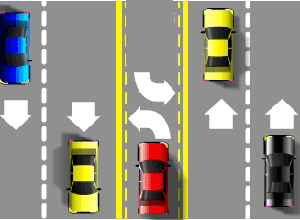
- 1.Beginning or ending left turns
- 2.Passing slow vehicles
- 3.Making right or left turns
When you want to overtake and pass another vehicle you should:
- 1.Change lanes quickly so the other driver will see you
- 2.Signal and pass when safe to do so
- 3.Stay close behind so you need less time to pass
- 4.Wait for a signal from the other driver
You are driving on a two-way street and want to turn left at the corner. give the right-of-way to:
- 1.Any vehicle coming towards you
- 2.Pedestrians on the sidewalk waiting for a WALK signal
- 3.Vehicles stopped at the red light
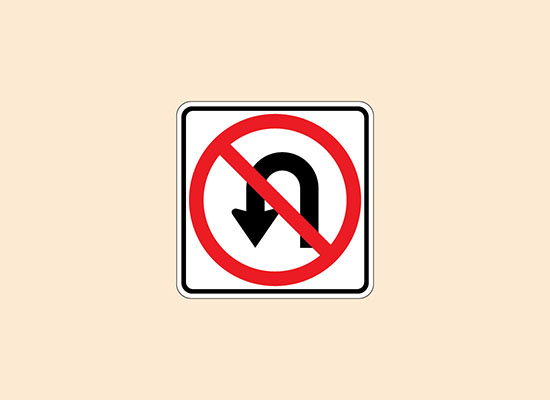
- 1.U-turn area ahead
- 2.No U-turn
- 3.No passing
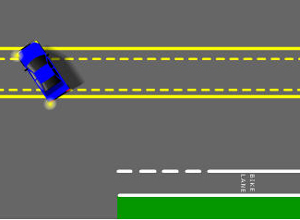
- 1.Must use this lane before merging into regular traffic
- 2.May not turn into this lane while making your left turn
- 3.May turn into this lane before merging into regular traffic
When you are driving in the left lane of a four-lane freeway and wish to exit on the right, you should:
- 1.Carefully cross all the lanes at one time
- 2.Slow before beginning each lane change
- 3.Change lanes one at a time until you are in the proper lane
U-turns in residential districts are legal:
- 1.When there are no vehicles approaching nearby
- 2.Across two sets of solid double yellow lines
- 3.On a one-way street at a green arrow
When you come to an intersection that is blocked by other traffic, you should:
- 1.Get as close as possible to the other cars
- 2.Sound your horn to make the cars move up
- 3.Stay out of the intersection until you can pass through
- 4.Go slowly until the traffic ahead moves
A red and white triangular sign at an intersection means:
- 1.Look both ways as you cross the intersection
- 2.Always come to a full stop at the intersection
- 3.Slow down if an emergency vehicle is approaching
- 4.Slow down and be prepared to stop if necessary
Who has the right-of-way at an inersection with no crosswalks?
- 1.Pedestrians, but only with the green walk signal
- 2.Pedestrians always have the right-of-way
- 3.Vehicles, but they should slow down and be careful
What is the only effective way to reduce your blood alcohol content (bac)?
- 1.Drinking coffee
- 2.Exercising
- 3.Taking a cold shower
- 4.Allowing your body time to get rid of alcohol
If you want to turn right at the next intersection, begin your turn signal:
- 1.When you reach the intersection
- 2.At least 100 feet before the turn
- 3.As soon as you see cars behind you
- 4.At least 50 feet before the turn
To avoid getting rear-ended by another vehicle in an emergency, you should:
- 1.Start braking early as a signal to the driver behind you
- 2.Check your rearview mirror often
- 3.Drive with your left foot on the brake pedal at all times
- 4.Turn your head and look over your shoulder
Why should drivers and passengers adjust seat headrests in motor vehicles?
- 1.It lets people maintain their hair styles
- 2.Tired people can prop up their heads, helping them stay alert
- 3.It helps people relax, relieving the stress of driving
- 4.It helps people avoid and reduce the severity of neck injuries