To ensure the lane next to you is clear when you want to change lanes:
- 1.Turn your head and look in the lane you are going to enter
- 2.Look into the rearview mirror only
- 3.Turn your head and look over the right shoulder
The safest way for you to enter the flow of traffic on a highway with a very short entrance lane is to:
- 1.Wait for a large gap in traffic then speed up quickly
- 2.Get up to cruising speed gradually so other cars will see you
- 3.Use the left lane of the highway to get up to cruising speed
- 4.Use as much ramp as possible to get up to cruising speed
When a red light flashes at a railroad crossing, you must:
- 1.Stop only if you see a train coming
- 2.Slow down before crossing
- 3.Stop 10 ft behind the signal
- 4.Stop and then proceed when safe
Which of the following influences the effects of alcohol?
- 1.How much time passes between drinks
- 2.The body weight of an individual
- 3.The amount of food in the stomach
- 4.All three choices
If you exit a freeway with a ramp that curves downhill, you should:
- 1.Slow to the posted speed limit for the freeway
- 2.Start braking when you enter the curve
- 3.Slow to a safe speed before the curve
What does a flashing yellow light mean?
- 1.Pedestrian crossing
- 2.Proceed with caution
- 3.Come to a full stop
- 4.Merging traffic
It's best not to drive in the fog, but if you must, you should use:
- 1.High-beam lights
- 2.Fog lights only
- 3.Low-beam lights
A traffic light which has a green arrow and a red light means that:
- 1.Vehicles moving in any direction must stop
- 2.You may drive only in the direction of the green arrow
- 3.You must wait for a green light
- 4.You may only drive straight ahead
When waiting to make a left turn, you should give the right-of-way to vehicles coming from the opposite direction:
- 1.Until all of the cars have passed
- 2.Until dangerously close cars have passed
- 3.Until at least two vehicles have passed
Drivers must use turn signals when:
- 1.Changing lanes and making turns
- 2.All choices are correct
- 3.Driving toward or away from a curb or roadside
- 4.Entering and exiting freeways
If another driver "cuts " in front of you, it would be better if you:
- 1.Accelerate to avoid being cut off
- 2.Brake suddenly
- 3.Take your foot off the gas
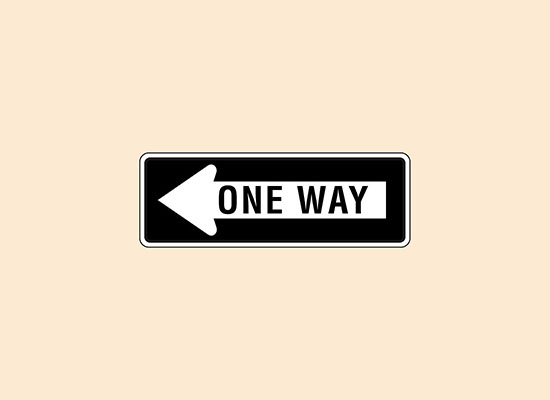
- 1.One-way street—traffic travels to the left
- 2.One-lane road to the left
- 3.All traffic must turn right ahead
Which of the following statements is true about bac?
- 1.A chemical test for BAC is needed for an alcohol conviction
- 2.BAC levels are reduced by a person's physical fitness
- 3.The "breathalyzer " is a test of a person's BAC
- 4.After drinking, coffee or a cold shower will lower your BAC
Backing up your vehicle is:
- 1.Only dangerous in large vehicles
- 2.Always dangerous
- 3.Not dangerous if you have a helper
If your vehicle breaks down, you should:
- 1.Place emergency flares/signs 100 feet around your vehicle
- 2.All choices are correct
- 3.Pull off of the road as far as possible, while still visible
- 4.Turn on four-way flashers and open your hood (if not wet out)
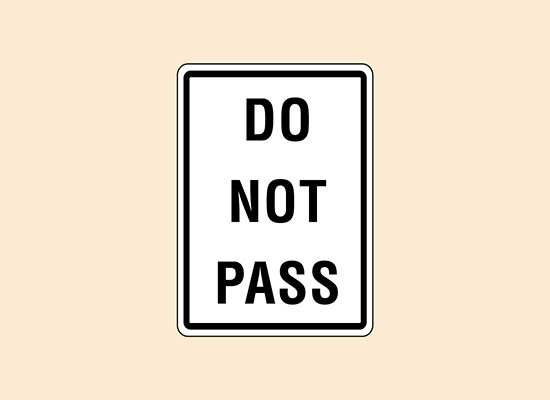
- 1.Other vehicles for any reason
- 2.Until after you pass the sign
- 3.Unless it seems safe to do so
- 1.Let other traffic go first
- 2.Make a complete stop before turning
- 3.You have the right-of-way
- 4.The vehicle on the right goes first
You are required to wear your safety belt in a moving vehicle:
- 1.Unless your vehicle was manufactured before 1975
- 2.If your vehicle is equipped with safety belts
- 3.Unless you are riding in the back of a pickup/camper
If the driver's left hand and arm are extended upward, it means she will:
- 1.Stop
- 2.Turn left
- 3.Go straight ahead
- 4.Turn right
When attempting to stop on a slippery road, you should:
- 1.Shift into neutral, do not use the brakes
- 2.Shift to a lower gear, do not use the brakes
- 3.Apply the brakes quickly and firmly
- 4.Apply the brakes in slow, steady strokes