When a red light flashes at a railroad crossing, you must:
- 1.Slow down before crossing
- 2.Stop 10 ft behind the signal
- 3.Stop and then proceed when safe
- 4.Stop only if you see a train coming
When you approach a sharp curve in the road, you should:
- 1.Accelerate into the curve and brake out of it
- 2.Start braking as soon as you enter the curve
- 3.Start braking before you enter the curve
The very first effect of even a small amount of alcohol on a person's safe driving ability is to reduce his or her:
- 1.Good judgment
- 2.Muscle control
- 3.Steering ability
- 4.Quick reflex movements
A "no stopping " sign means that, unless directed to do so by a policeman, you may stop only:
- 1.Long enough to unload packages
- 2.To avoid conflict with other traffic
- 3.To discharge passengers
- 4.For less than 5 minutes
Which of these statements is true about driving and taking drugs?
- 1.Only illegal drugs can impair your driving
- 2.Even over-the-counter drugs can impair your driving
- 3.Any prescription drug is safe to use if you don't feel drowsy
When driving at night, you can reduce the glare from an approaching car's headlights by:
- 1.Having the inside lights on to make the amount of light equal
- 2.Looking at a spot on the lower edge of the steering wheel
- 3.Looking to the lower right side of your lane
- 4.Wearing glasses with lightly tinted lenses
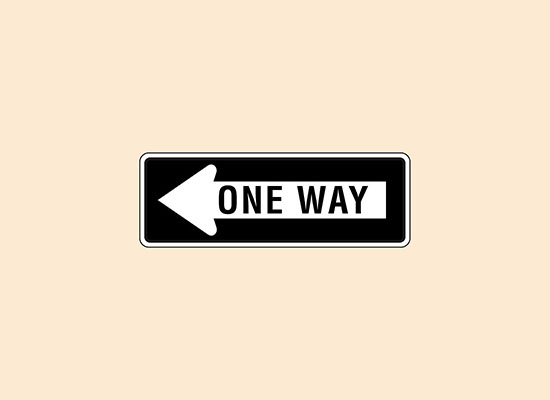
- 1.One-lane road to the left
- 2.One-way street—traffic travels to the left
- 3.All traffic must turn right ahead
Large trucks turning right onto a street with two lanes in each direction:
- 1.Must stay in the right lane at all times
- 2.May complete their turn in either the right or the left lane
- 3.Often have to use part of the left lane to complete the turn
If you see children playing nearby, before backing out of your driveway, you should:
- 1.Race your motor to warn the children that you are moving
- 2.Walk to the back of the car to be sure the way is clear
- 3.Sound your horn so the children will hear you
- 4.Tell the children to stay away from the driveway
What does a "slow moving vehicle " emblem look like?
- 1.A diamond-shaped yellow sign
- 2.A triangular orange sign
- 3.A square red sign
- 4.A round green sign
In new york state, what bac is evidence of intoxication?
- 1.0.05%
- 2.0.03%
- 3.0.10%
- 4.0.08%
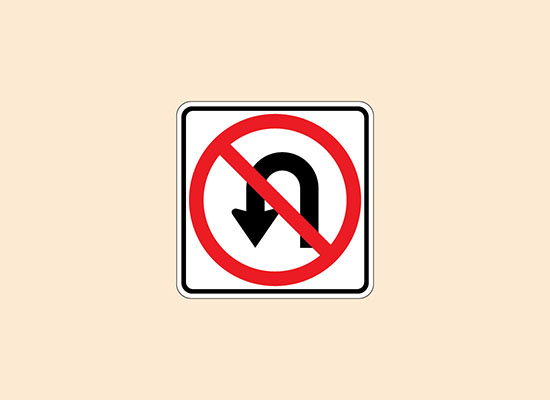
- 1.U-turn area ahead
- 2.No passing
- 3.No U-turn
When you drive in heavy fog during daylight hours you should drive with your:
- 1.Headlights off
- 2.Parking lights on
- 3.Headlights on high beam
- 4.Headlights on low beam
U-turns in residential districts are legal:
- 1.Across two sets of solid double yellow lines
- 2.On a one-way street at a green arrow
- 3.When there are no vehicles approaching nearby
If you rear-ended a car, you were probably:
- 1.Looking in your rearview mirror too often
- 2.Weaving in and out of traffic
- 3.Following too closely
Improperly inflated tires can result in:
- 1.Uneven wear and additional avoidable replacement of tires
- 2.All choices are correct
- 3.Inefficient gas mileage
- 4.Blown out tires and shaking in the steering wheel
When attempting to stop on a slippery road, you should:
- 1.Apply the brakes in slow, steady strokes
- 2.Shift into neutral, do not use the brakes
- 3.Apply the brakes quickly and firmly
- 4.Shift to a lower gear, do not use the brakes
When you are driving slowly in the freeway fast lane, blocking traffic which wishes to pass, you should:
- 1.Change lanes to the right when it is safe to do so
- 2.Not change lanes when you are driving the speed limit
- 3.Only change lanes when there are five or more vehicles behind you
A diamond-shaped sign is a:
- 1.Road hazard sign
- 2.School crossing sign
- 3.Interstate route sign
- 4.Speed limit sign
Which of these statements is true about slippery road surfaces?
- 1.Bridges and overpasses freeze last
- 2.On cold, wet days, shade from buildings or trees can hide spots of ice
- 3.Pavements are not slippery the first few minutes after it starts raining on a hot day