You must carefully look for bicycles in traffic lanes because they:
- 1.Have the right-of-way
- 2.Could be hidden in your blind spots
- 3.Must ride facing oncoming traffic
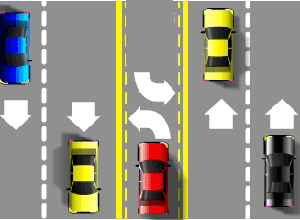
If you are stopped, intending to turn left, but oncoming vehicles are approaching, you should:
- 1.Turn immediately if there are no pedestrians nearby
- 2.Give the oncoming vehicles the right-of-way
- 3.Turn because you have the right-of-way
In new york state, what bac is evidence of intoxication?
- 1.0.05%
- 2.0.03%
- 3.0.10%
- 4.0.08%
What is a common factor in the traffic deaths of teenage drivers?
- 1.Fear of taking risks
- 2.Lack of driving skill
- 3.Slow reflexes
- 1.Beginning or ending left turns
- 2.Making right or left turns
- 3.Passing slow vehicles
If an oncoming vehicle has started to turn left in front of you:
- 1.Maintain your speed and take your right-of-way
- 2.Slow or stop your car to prevent an accident
- 3.Honk your horn to warn the other driver and maintain your speed
If you are approaching an intersection with a red flashing light. what should you do?
- 1.Slow down and allow cross traffic to go first
- 2.Stop before entering and then proceed when safe
- 3.Wait for the green light before entering
When should you let other drivers go first even you have a legal right-of-way?
- 1.When it helps prevent accidents
- 2.When other drivers want to drive faster
- 3.Never. It confuses other drivers
Driving under the influence of any drug which makes you drive unsafely is:
- 1.Against the law
- 2.Permitted if it is a diet pill or cold medicine
- 3.Permitted if a doctor or nurse administered it
Which of these statements is true about road construction zones?
- 1.You are responsible for the safety of the road workers
- 2.Fines are the same for violations committed in construction zones
- 3.Slow down only if you think workers are present
If you are parked parallel to the curb, you may get out of the car on the traffic side:
- 1.During the daytime when other drivers can see you
- 2.When the traffic light at the closest intersection turns red
- 3.When you won't interfere with oncoming vehicles
- 4.If you use your four-way flasher first
When you are waiting in an intersection completing a left turn, you should:
- 1.Signal and keep your wheels straight
- 2.Flash your headlights so the driver will let you get through
- 3.Drive around the rear of a car if it blocks you
- 4.Signal and keep your wheels turned to the left
Where should you stop your vehicle when there is no limit line?
- 1.Twenty feet before the intersection
- 2.Just past the corner
- 3.At the corner
When two vehicles enter an uncontrolled intersection from different highways at the same time, which vehicle must yield the right-of-way:
- 1.Either one
- 2.Vehicle on the right
- 3.Neither one
- 4.Vehicle on the left
- 1.Other vehicles for any reason
- 2.Unless it seems safe to do so
- 3.Until after you pass the sign
If a car ahead of you has stopped at a crosswalk, you should:
- 1.Drive to the right edge of the road and stop
- 2.Stop and then proceed when safe
- 3.Slow down, look both ways, and proceed
- 4.Change lanes, look carefully, and pass
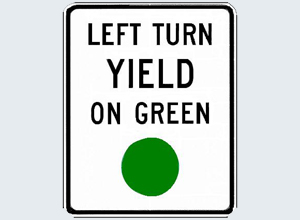
- 1.You must wait for the green light
- 2.You may turn left on a green light when it is safe
- 3.You may turn left or right when the light is green
If you are driving and finding it hard to stay awake, you should:
- 1.Pull off the road, park, remove your ignition key and rest
- 2.Open your windows
- 3.Drink plenty of black coffee
When you are driving in the left lane of a four-lane freeway and wish to exit on the right, you should:
- 1.Change lanes one at a time until you are in the proper lane
- 2.Carefully cross all the lanes at one time
- 3.Slow before beginning each lane change
In which of the following situations is passing always forbidden:
- 1.You are on a one-way street that has two lanes
- 2.The vehicle ahead is making a left turn
- 3.The vehicle ahead is going to park parallel to the curb
- 4.The vehicle ahead is stopped for a pedestrian in a crosswalk