When a car with bright headlights comes toward you at night, you should:
- 1.Move toward the right edge of your lane
- 2.Look below the oncoming headlights
- 3.Look toward the right edge of your lane
- 4.Look above the oncoming headlights
A blind person crossing the street legally has the right-of-way when:
- 1.Helped by another person
- 2.Wearing dark-colored glasses
- 3.Led by a guide dog, or using a white or metallic cane
- 4.Wearing light-colored clothing
You have the right-of-way when you are:
- 1.Entering a traffic circle
- 2.Already in a traffic circle
- 3.Leaving a parking space
- 4.Backing out of a driveway
Look carefully for motorcycles before you change lanes because:
- 1.They always have the right-of-way at intersections
- 2.It is illegal for motorcycles to share traffic lanes
- 3.Their smaller size makes them harder to see
The very first effect of even a small amount of alcohol on a person's safe driving ability is to reduce his or her:
- 1.Good judgment
- 2.Muscle control
- 3.Quick reflex movements
- 4.Steering ability
A law enforcement officer notices that one of your passengers is not wearing a seat belt and writes a citation. which of the following is true?
- 1.You may receive the citation if your passenger is 15 years old or younger
- 2.Your passenger will receive a citation regardless of age
- 3.Both you and your passenger who is under 16 years old will receive a citation
Which of the following do some highways use to direct drivers into the proper turn lanes?
- 1.White arrows in the middle of the lanes
- 2.Flashing yellow lights
- 3.Flashing red lights
- 4.White lines on the side of the road
If another driver "cuts " in front of you, it would be better if you:
- 1.Brake suddenly
- 2.Accelerate to avoid being cut off
- 3.Take your foot off the gas
Other drivers are not making room for you to merge onto a freeway with heavy traffic. if it is absolutely necessary, you may:
- 1.Make room by forcing your way into a small gap
- 2.Drive onto a freeway shoulder until a gap appears
- 3.Stop before merging with freeway traffic
When a school bus is stopped and its red lights are flashing, you may:
- 1.Pass if you are facing the front of the bus
- 2.Pass if no children are on the road
- 3.Not pass while the red lights are flashing
- 4.Pass if it is on the other side of a divided highway
When you are waiting in an intersection completing a left turn, you should:
- 1.Drive around the rear of a car if it blocks you
- 2.Signal and keep your wheels straight
- 3.Signal and keep your wheels turned to the left
- 4.Flash your headlights so the driver will let you get through
A red and white triangular sign at an intersection means:
- 1.Look both ways as you cross the intersection
- 2.Slow down and be prepared to stop if necessary
- 3.Slow down if an emergency vehicle is approaching
- 4.Always come to a full stop at the intersection
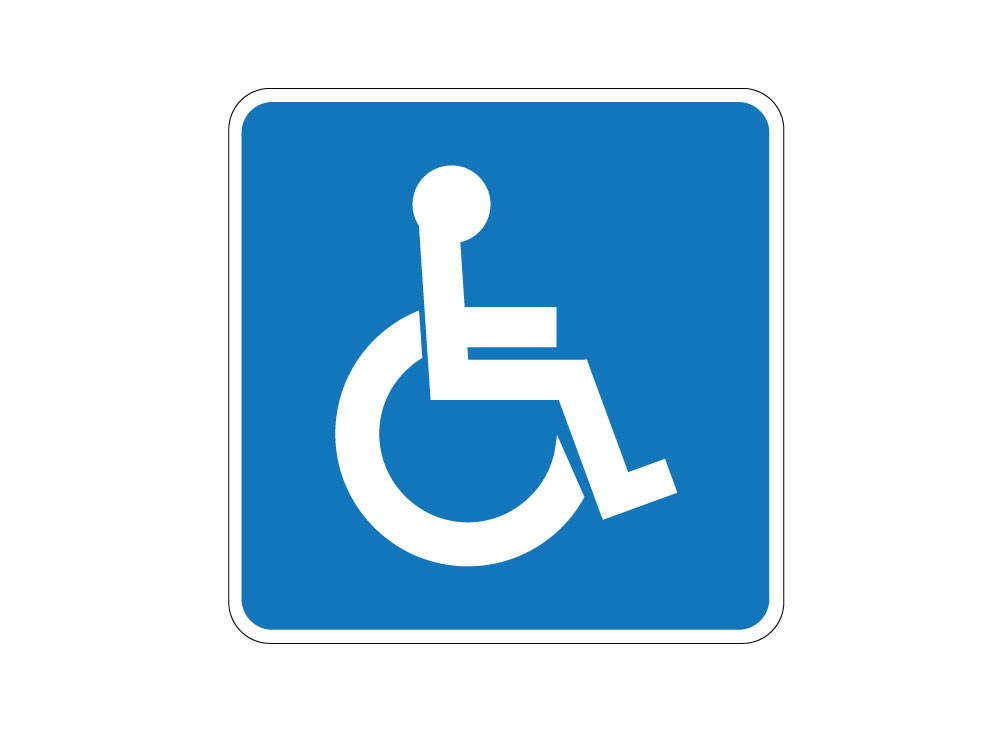
- 1.Parking is for drivers who have a letter from their physician
- 2.Parking is allowed for unloading passengers only
- 3.Parking is for disabled persons with a placard or special plates
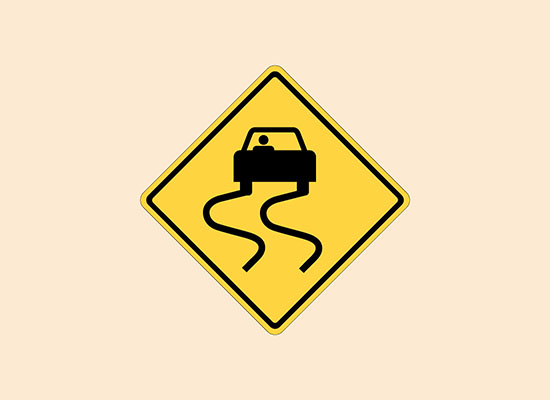
- 1.The road ahead may be slippery
- 2.The road ahead has many curves
- 3.There is a sharp curve in the road ahead
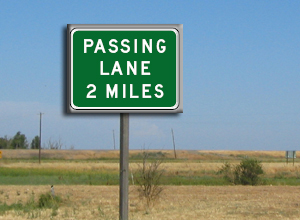
- 1.Don't pass unless it is safe to do so
- 2.There is a passing lane ahead
- 3.Be prepared for vehicles passing you
Traffic fatalities are _____________ at night compared to daytime.
- 1.about three to four times as high
- 2.about twice as high
- 3.about the same
- 4.about five to six times as high
When planning to pass other vehicles, you should:
- 1.Assume they will let you pass if you use your turn signal
- 2.Assume they will maintain a constant speed
- 3.Not assume they will make space for you to return to your lane
You should check traffic behind you:
- 1.Only on a freeway or highway
- 2.So you will know if you are being tailgated
- 3.Only when you are slowing down
To see vehicles in your blind spots, you must look:
- 1.Over your shoulders
- 2.In your inside rearview mirror
- 3.In your side mirrors
In which of the following situations is passing always forbidden:
- 1.The vehicle ahead is stopped for a pedestrian in a crosswalk
- 2.The vehicle ahead is going to park parallel to the curb
- 3.You are on a one-way street that has two lanes
- 4.The vehicle ahead is making a left turn