You are in a truck's blind spot if:
- 1.You follow no closer than 12 ft
- 2.You stay close to the vehicle's left front wheel
- 3.You can't see the truck driver in his or her side mirror
Which of the following statements is true about bac?
- 1.The "breathalyzer " is a test of a person's BAC
- 2.After drinking, coffee or a cold shower will lower your BAC
- 3.A chemical test for BAC is needed for an alcohol conviction
- 4.BAC levels are reduced by a person's physical fitness
Seat belts properly worn will:
- 1.Keep you from moving your body
- 2.Prevent accidents
- 3.Reduce the risk of injury
Yellow lines separate:
- 1.Traffic lanes on one-way streets
- 2.Railroad tracks
- 3.Traffic lanes moving in opposite directions
When looking ahead of your vehicle while driving, you should:
- 1.Scan your surroundings
- 2.Look straight ahead at all times
- 3.Look only at the car ahead of you
What should you do if a tire blows out while you are driving?
- 1.All choices are correct
- 2.Slowly release the gas pedal; if you must brake, do so gently
- 3.Hold your steering wheel tightly
- 4.Bring the vehicle to a stop off the road, and change tire
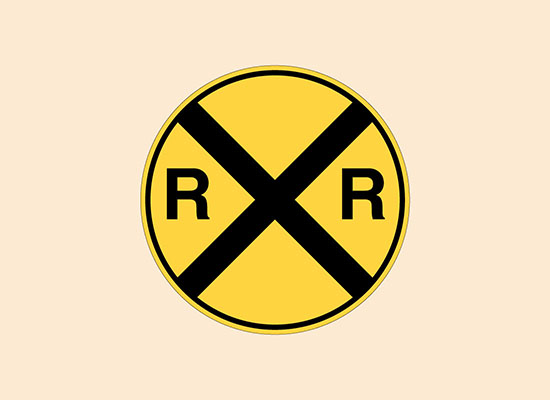
If there is a railroad crossing ahead and a red flashing signal warns you of an approaching train, you must:
- 1.Slow down before crossing
- 2.Stop only if you see a train coming
- 3.Stop and don't proceed until the red lights stop flashing
Driving slower than other traffic tends to:
- 1.Not change the chances of having an accident
- 2.Make an accident more likely to happen
- 3.Make an accident less likely to happen
- 1.An intersection
- 2.A crosswalk
- 3.A blasting zone
- 4.A railroad crossing
Which of these statements is true about motorcycles?
- 1.Motorcycles may not share traffic lanes
- 2.Motorcycles are small and can easily be seen by drivers
- 3.Motorcycles should be followed at a greater distance
Pedestrians using guide dogs or white canes must:
- 1.Be given the right-of-way at corners only
- 2.Be given the right-of-way at all times
- 3.Cross at intersections with traffic controls only
Safely backing up your vehicle includes all of the following except:
- 1.Checking behind your vehicle before you get in
- 2.Tapping your horn before you back up
- 3.Looking over your right shoulder as you back up
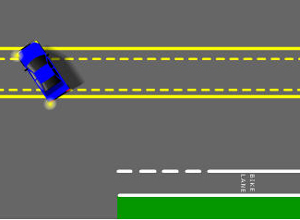
- 1.May not turn into this lane while making your left turn
- 2.Must use this lane before merging into regular traffic
- 3.May turn into this lane before merging into regular traffic
When you drive from a private to a public road, you should:
- 1.Drive out fast to merge smoothly with the traffic
- 2.Blow your horn to warn cars you are entering the roadway
- 3.Stop with part of the car on the roadway to warn other drivers
- 4.Yield the right-of-way to pedestrians and roadway traffic
When should you let other drivers go first even you have a legal right-of-way?
- 1.When other drivers want to drive faster
- 2.When it helps prevent accidents
- 3.Never. It confuses other drivers
You should use your vehicle's horn when:
- 1.All choices are correct
- 2.Approaching bicyclists
- 3.Traffic ahead of you is traveling below the speed limit
- 4.You are involved in an emergency situation
When you hear the siren or see the flashing red light of a closely approaching emergency vehicle, and you are not in the intersection, you should:
- 1.Drive slowly in the right lane until it has passed
- 2.Speed up so that you can stay ahead of it
- 3.Drive to the right edge of the road and stop
Driving under the influence of any drug which makes you drive unsafely is:
- 1.Against the law
- 2.Permitted if a doctor or nurse administered it
- 3.Permitted if it is a diet pill or cold medicine
What is the only effective way to reduce your blood alcohol content (bac)?
- 1.Exercising
- 2.Taking a cold shower
- 3.Drinking coffee
- 4.Allowing your body time to get rid of alcohol
What consequences can result from driving under the influence of alcohol or other drugs?
- 1.A mandatory fine
- 2.Possible imprisonment
- 3.All of these choices
- 4.Driver license revocation